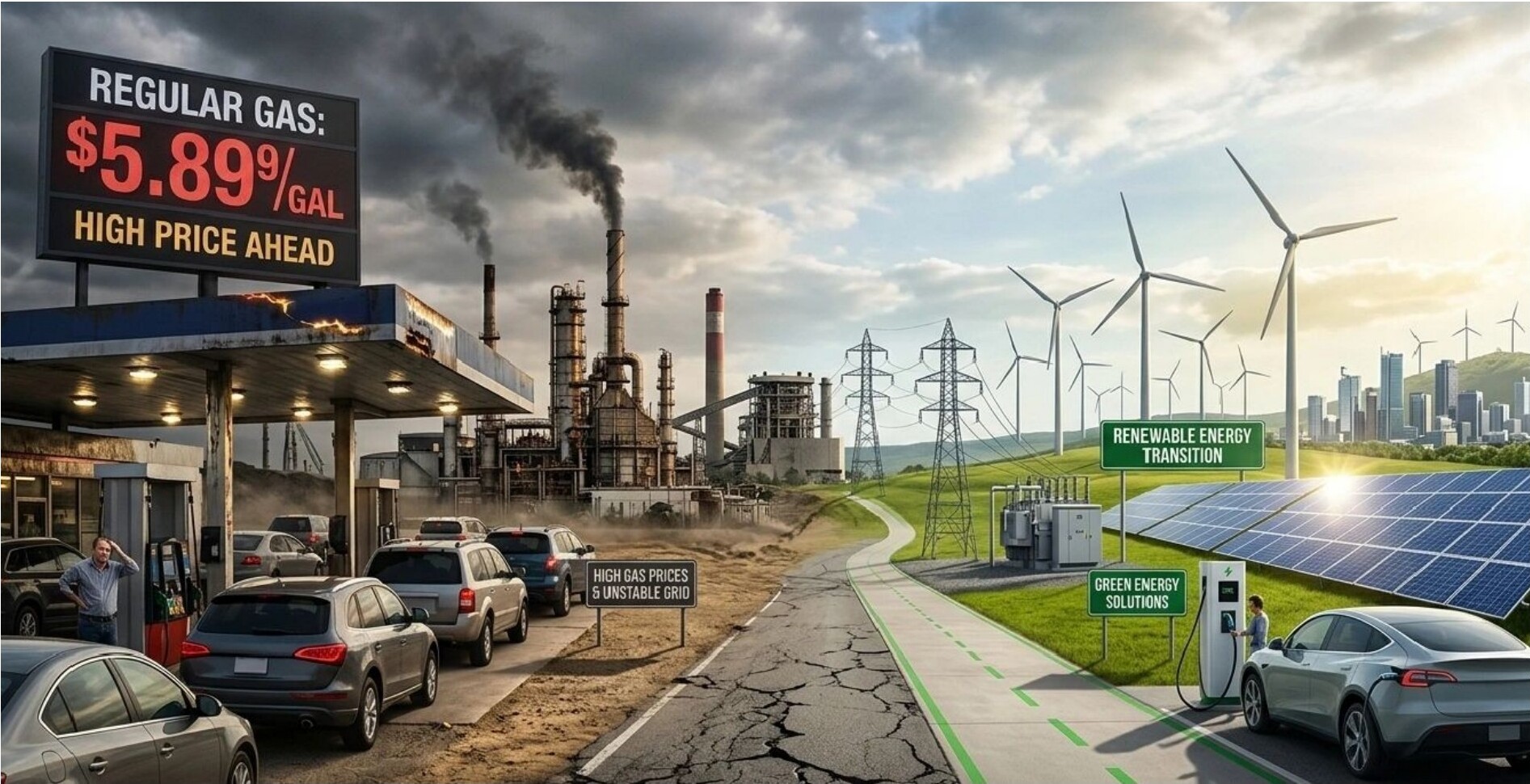
The world’s oil market has hit another serious snag. The IEA described the latest Middle East disruption as the largest supply disruption in oil market history, with nearly 20 mb/d of crude and product flows through the Strait of Hormuz affected at one point. Barrel prices have approached US$120/bbl, and 2026 oil demand growth has been revised lower as higher prices weigh on consumption.
Oil shocks do not just move fuel prices. They reprice energy security. And when energy security gets repriced, capital starts moving toward the assets that reduce dependence on volatile fuel markets.
The Numbers Already Show the Direction
The IEA expects total energy investment to reach US$3.3 trillion in 2025. Around US$2.2 trillion is going to renewables, nuclear, grids, storage, low-emissions fuels, efficiency, and electrification — compared with US$1.1 trillion to oil, gas, and coal.
Renewables and nuclear are expected to provide around half of global electricity generation by 2030, with renewable output forecast to grow by roughly 1,000 TWh per year through 2030. The IEA also estimates that annual grid investment needs to rise by about 50% from today’s US$400 billion by 2030.
Which Assets Actually Benefit?
Not just renewables. The winners are the assets that do one or more of these four things:
- Replace imported fuel
- Improve reliability
- Lower delivered energy cost
- Convert resilience into contracted cash flow
That means the real beneficiaries are renewable generation with a transmission path, storage, grid infrastructure, flexible power, waste-to-energy, electrification platforms, and domestic energy systems with long-term offtake logic.
The Big Takeaway
The transition is no longer only about decarbonization. It is about control. Who controls energy better, who imports less fuel, who can operate through shocks, and which platforms turn that into bankable cash flow. That is where serious capital will keep going.
“The transition is no longer only about decarbonization. It is about control — who imports less fuel, who can operate through shocks, and which platforms turn that into bankable cash flow.”