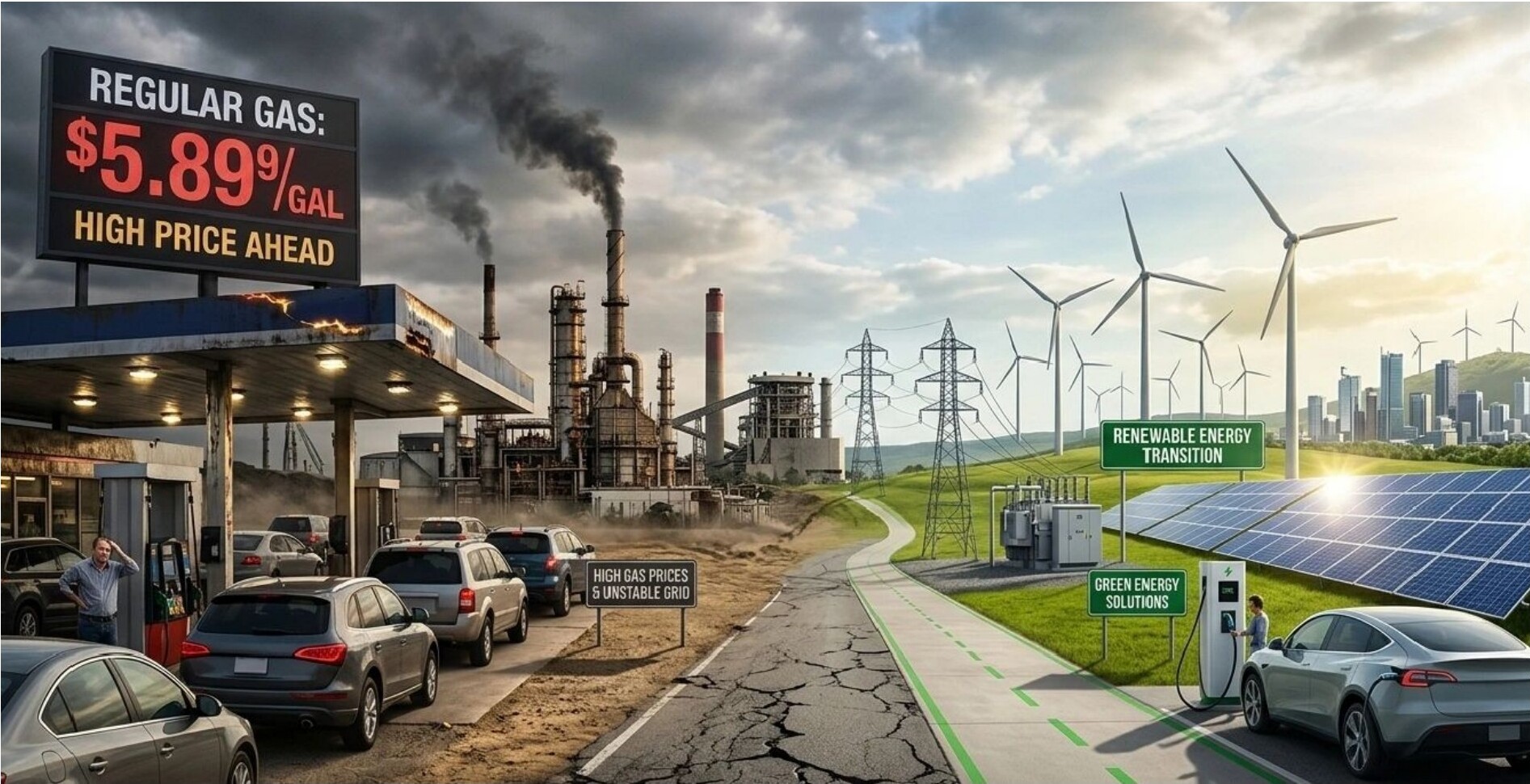
In the span of a few months, two facts have defined how we think about capital and infrastructure in our region.
Fact 1: In 2024, Ecuador endured nationwide rolling blackouts of up to 14 hours per day, triggered by severe drought and years of under-investment in generation and maintenance. No new large-scale capacity had been added since Coca Codo Sinclair came online in 2016, even as demand grew by hundreds of megawatts.
Fact 2: At the same time, institutional capital is pouring into Latin American infrastructure and energy transition assets. Patria Investments closed a US$2.9 billion infrastructure fund — now the largest in the region — while Chile and Paraguay saw hundreds of millions committed to hybrid solar-storage and green lending platforms in just a few transactions.
Ecuador’s blackouts were not a headline for us; they were lived reality. We watched cities shut down on rotating schedules, diesel generators roar to life on rooftops, and credible estimates of economic loss reach roughly US$12 million for every hour without power.
At the same time, capital moved decisively into projects that look very much like what we are already building: utility-scale solar-plus-storage, waste-to-energy, green credit lines, and real-economy decarbonization platforms.
“Capital is not scarce. It is selective. It flows to platforms that can translate real needs — energy security, waste, food systems, water, digitalization — into fiduciary-grade, risk-managed investments.”
A Country That Knows What an Energy Crisis Feels Like
Ecuador’s 2023–2024 electricity crisis was not an abstract “transition challenge.” It was engineered by delay:
- Severe drought cut water levels at major hydro plants.
- Thermal plants had been neglected; of ~2 GW of installed fossil capacity, only about 880 MW was truly operational.
- Blackouts began in April 2024 at up to 8 hours per day and by late September expanded to 12–14 hours in many areas.
- The government rotated outages across the country; multiple energy ministers were removed amid the crisis.
By year-end, estimates put cumulative economic losses in the US$2–7.5 billion range. The diagnosis is consistent: no systematic capacity build-out, delayed maintenance, and over-reliance on cheap hydro with no resilient backup.
The Capital Is There. The Question Is: Who Can Steward It?
Across the LatAm deal landscape, three types of transactions stand out: large multi-country infrastructure funds (Patria’s US$2.9B Infrastructure Fund V), landmark energy-transition projects (Grenergy’s 446 MW solar + 3.5 GWh storage Oasis de Atacama), and green banking platforms (a US$370M syndicated facility for Sudameris Bank in Paraguay).
Investors are not waiting — they are deploying into structures they can underwrite. That is why RDT was built with two tightly linked layers: a bank-anchored Trust, and a real-asset Private Equity engine.
What RDT Is Building (Not Theorizing)
Across our portfolios the pattern is consistent: we take structural liabilities and bottlenecks and turn them into cash-flowing, ESG-aligned assets — Waste-to-Energy + SAF, coastal wind–solar, water and desalination, Eco-Agro farmland, and ESG gold and tailings remediation.
Why This Matters Now
When a country loses around US$12 million for every hour of blackout, the cost of waiting for perfect clarity is not neutral. When a single infrastructure manager raises US$2.9 billion for LatAm real assets, it is clear capital is available for serious, well-structured platforms.
In a region where blackouts, droughts, and infrastructure gaps are no longer hypothetical, the real question is not if sustainable infrastructure will be built, but who will structure and steward it to institutional fiduciary standards. That is the RDT role.
“The constraint is no longer the existence of capital; it’s the credibility of the platforms that propose to allocate it in high-risk, high-impact environments.”